

TL;DR
The third annual Progress Conference was a great success. The inaugural Progress Conference Europe will take place this spring, and we’ll be back for Progress Conference 2027 next fall. More info soon!
Follow RPI on YouTube and X to be notified as the videos from PC ’26 are released.
We’re still hiring for an event manager and development manager.

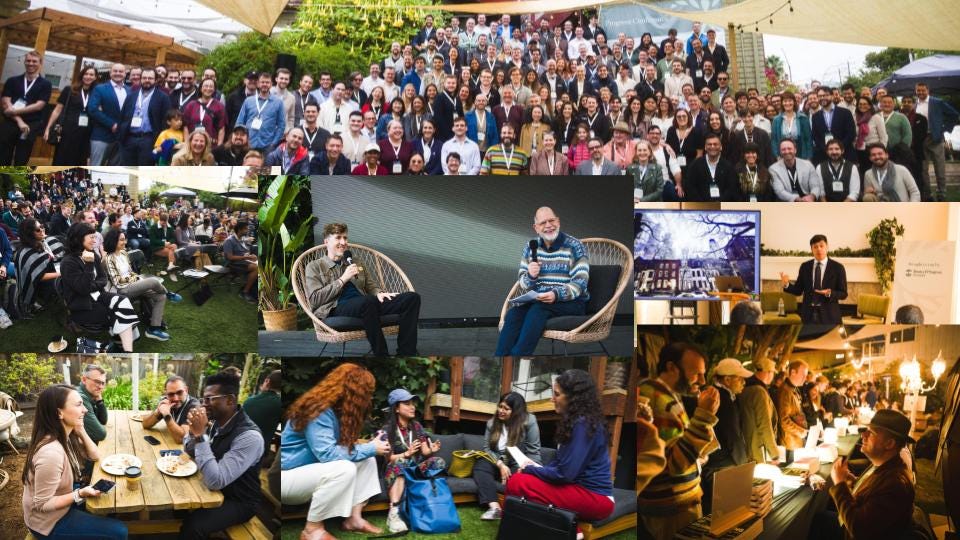
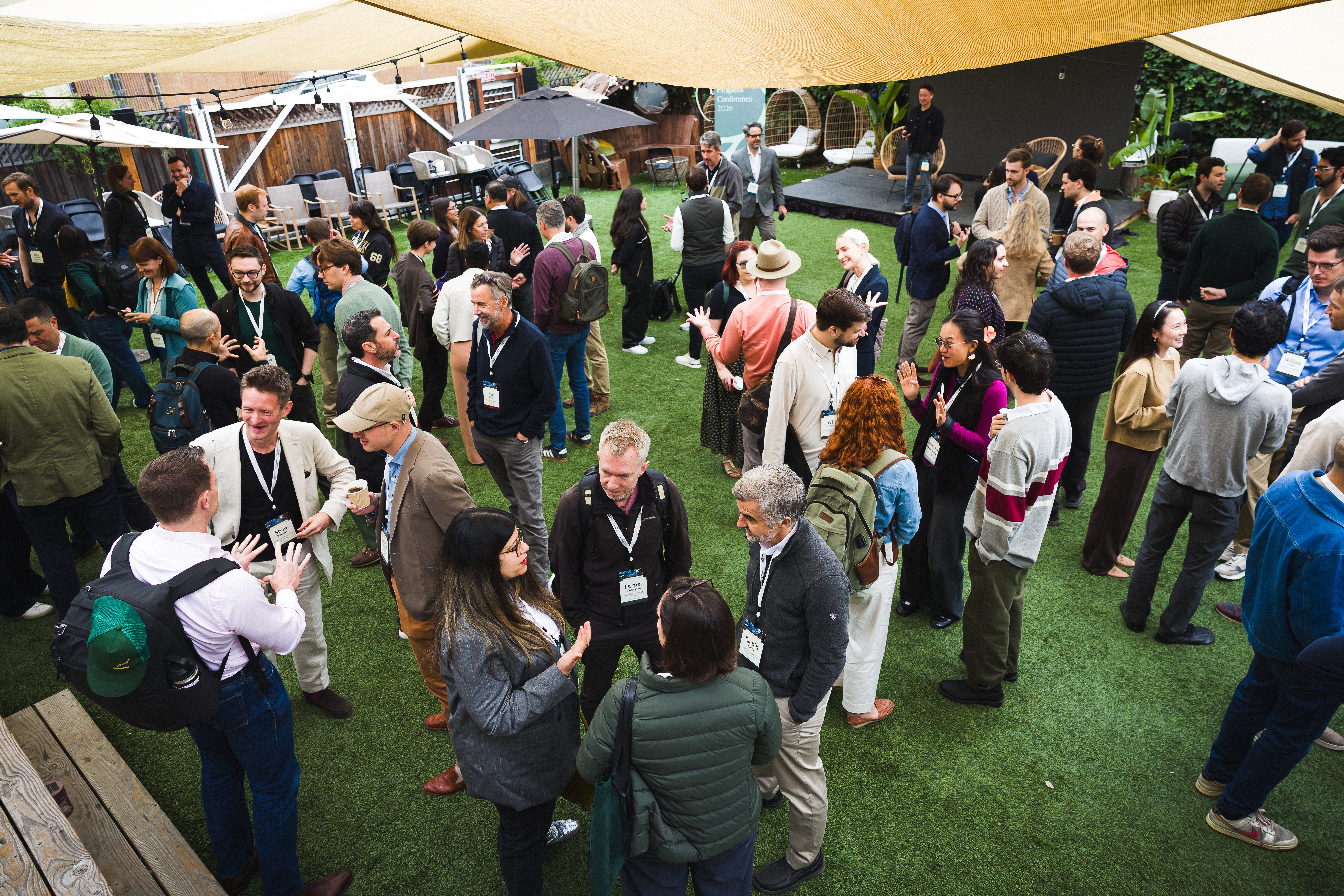
Once is an accident, twice is a coincidence, three times is a pattern. Progress Conference 2026 was the largest one yet, welcoming more than 450 attendees over four days of programming. But despite the conference’s growth, this year’s gathering felt less like a conference and more like a family reunion.
In some ways, the familial feel was quite literal. We offered childcare. Attendees’ kids ran around the venue. Teenage graduates of our Progress in Medicine program brought their parents. Returners caught up with friends from past conferences.
There were too many great sessions to sum up in a single post, but here are five questions the RPI team is still thinking about after PC ’26.


1. Is progress having its bipartisan moment?
In June, the 21st Century ROAD to Housing Act passed with an 85–5 vote in the Senate and a 358–32 vote in the House. Last week, the Bipartisan American Affordability and Jobs Act (BAAJA) passed the Senate. Bipartisan support like that is rare in Washington, let alone on housing and permitting reform; making it easier to build has become something both parties can agree on.
As Rep. Josh Harder said at this year’s conference, “If we can unite the pieces of both parties that actually care about growth, that care about prosperity, that believe that if we actually build things, good things will happen.” We don’t see progress as a partisan issue. We believe in a world where progress is a vector on which both political parties should compete.
2. Will the pace of AI progress in software be matched in hardware?
This year’s conference featured several people working at the frontier where AI meets the physical world. Patrick McKenzie interviewed Zipline’s Ryan Oksenhorn, and Andrew Miller interviewed Waymo’s Dmitri Dolgov, to name just a few. We’re excited to release the full talks in the coming weeks (subscribe to RPI’s YouTube and X to watch!), but a common question we heard among attendees was: Can the world of atoms ever keep up with the world of bits?
Hardware has to contend with supply chains, regulators, and, as DARPA’s Stephen Winchell made abundantly clear in his talk, the laws of physics. In some parts of the world, drone delivery and driverless cars are already part of everyday life, but moving from pilot programs to widespread adoption is a different kind of challenge than shipping a new model.
3. Are we running enough experiments?
In his talk “Invention as a Search Problem,” Brian Potter showed a fascinating graph comparing the number of flight tests run by the Wright brothers and by Samuel Langley, their rival in the race to achieve powered, piloted flight. The Wrights ran nearly ten times as many. The upshot was clear: if you want to innovate more, you have to experiment more.
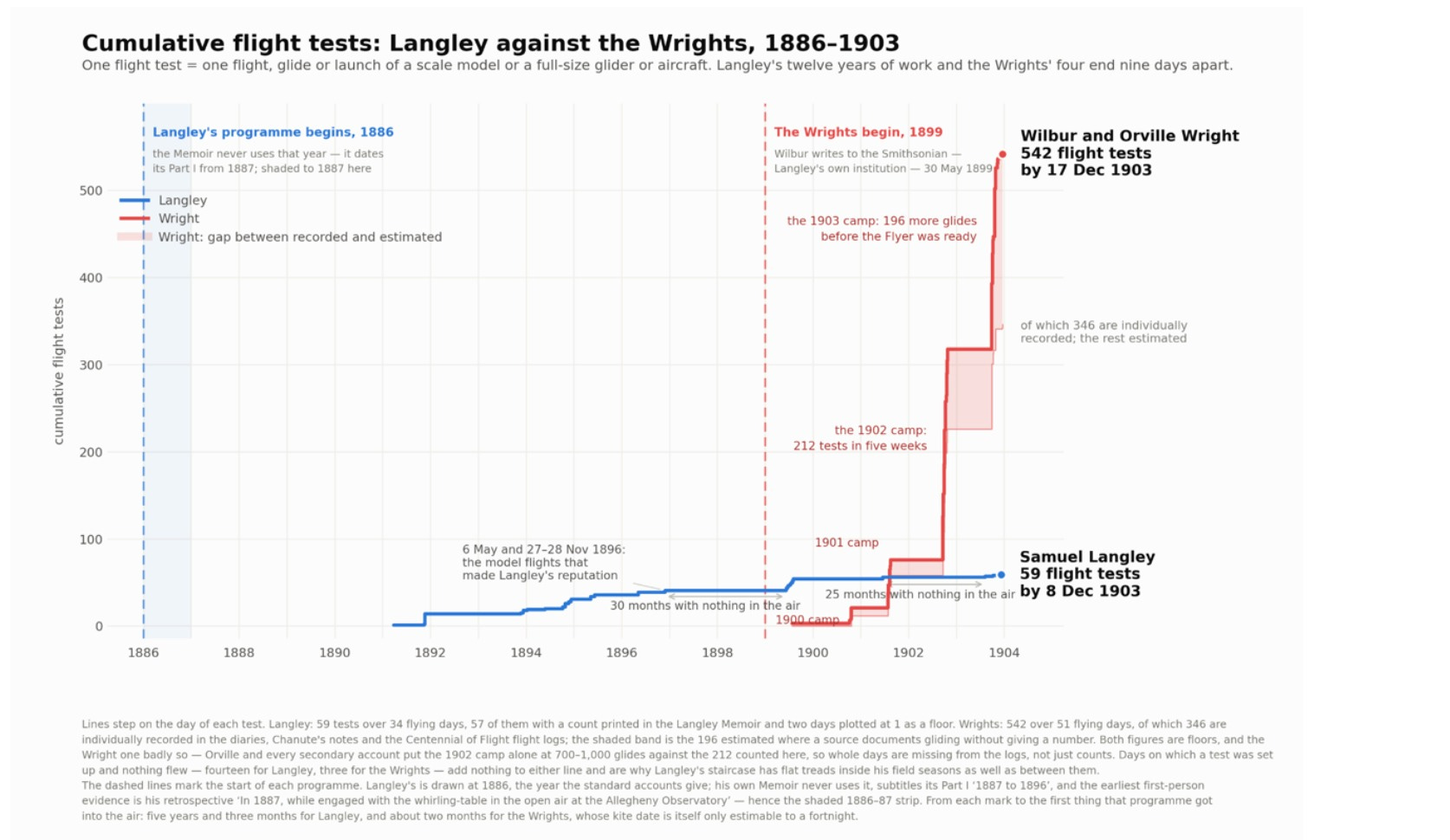
Whether sessions focused on education reform, mosquito eradication, or family-friendly neighborhoods, a common thread emerged: building “infrastructure for experimentation.” As Linus Pauling put it, “The best way to have a good idea is to have lots of ideas.” Progress doesn’t just require bold ideas; it requires places where those ideas can be tested.
4. Can we build places people actually want to live?
Passing housing reform is one thing; building homes, neighborhoods, and cities people love is another. A whole cluster of sessions this year focused on what makes housing desirable: Gabriel Metcalf on how to build new cities, Andrew Burleson on the neighborhoods of the future, Bobby Fijan on rebuilding the American Dream, and Devon Zuegel on building a solarpunk village from scratch.
One particularly interesting idea came from Alicia Pederson, who argued that as AI lowers the cost of coordination, we can develop new systems to build the kinds of walkable, family-friendly neighborhoods that earlier generations routinely created. In other words, the walkable neighborhoods we romanticize may not be relics of the past but previews of the future.
5. Are the kids alright?
Yes, we think the kids are alright (as Nisha Austin put it)—but how do we teach them about progress and inspire them to improve the world? We had young people of all ages at the conference: babies and young children joining their parents, impressive high school students from our Progress in Medicine cohort, and college students leading Abundance Corps campus chapters.
Matt Bateman of Alpha School gave a talk on what progress has been made in education. Dr. Gena Gorlin shared insights from her upcoming book, The Builder’s Mindset. And journalist Kelsey Piper led a discussion about how to teach the history of progress to children. In Jason’s closing remarks, he discussed RPI’s broader work in education and how we aim to inspire young people with the story of progress and give them the tools to build a career that drives the world forward.
One of the biggest changes from PC ’25 to PC ’26 was a shift from ideas toward solutions. We held workshops on how to bring Progress Conference to Europe (which is happening!) and how to help progress intellectuals publish more books. Looking ahead to Progress Conference 2027, we want to keep bridging the gap between ideas and action. See you next year, hopefully with a few more answers.
Don’t forget to follow RPI on YouTube and X to watch the videos of the conference as they’re released. Tomorrow we’ll be posting the conversation between Tyler Cowen and Moxie Marlinspike.
Some parting words from an attendee:
