

“Intelligence Age” is a new series from the Roots of Progress Institute that explores future applications for AI. It features reported essays that extrapolate the capabilities of AI systems along current trend lines.
In this, our inaugural feature, writer Anish Bhave imagines how trusted AI agents might improve the legibility of Indian manufacturing. He brings genuine clarity to the subject: For two generations, Bhave’s family has owned and operated auto ancillary manufacturing plants in and around the Sambhajinagar (erstwhile Aurangabad) industrial belt.
“Intelligence Age” is made possible by a grant from OpenAI. (The Roots of Progress Institute maintains editorial independence over the project.) We thank OpenAI for its support.
You can subscribe or unsubscribe to emails from this series, separately from the Roots of Progress newsletter, in your subscription settings.
In the popular imagination, artificial intelligence should push the technological frontier, and major AI labs should focus on solving the world’s most complex problems: lethal diseases, resource scarcity, ecological collapse, and global coordination challenges.
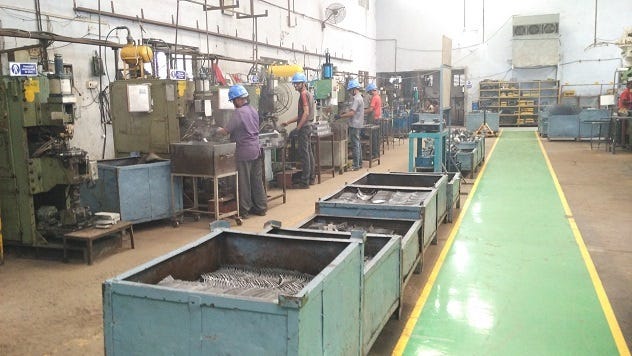
But a singular focus on moonshots obscures the transformational impact AI can have on the basic processes of industrial society: work, labor, and production. I am not talking about coding and research agents augmenting white-collar work, but about jobs in the developing world, where many people labor on the shop floor of a small or medium-sized business in Mumbai, Lagos, or Medellin. And it is here, in the day-to-day of production, that AI is tremendously promising.
Currently, these firms face a two-fold bind that AI can help address. First, they operate in low-trust societies with weak rule of law. That means principal-agent issues are a pressing concern. Second, these environmental norms create low standards for management and workplace organization.
The promise of AI lies in its ability to solve these persistent oversight challenges by acting as a trusty agent. A hard-working and unfailingly loyal AI could stand in for the steady cousin or uncle on whom small and mid-sized businesses lean, but without the downsides of family strife or the time required to build trust. An AI that can systematize supervision, enforce consistency and safety, and provide quality insight at a fraction of the cost will touch the length and breadth of manufacturing.
How Indian factories work and why the current arrangement can’t last
A helpful window into these small and medium-sized family businesses is the Indian industrial hub of Chhatrapati Sambhaji Nagar (Sambhahjinagar), once known as Aurangabad. Sambhahjinagar is located in the western Indian state of Maharashtra, which accounts for more than 12% of India’s GDP.
Sambhahjinagar took on an industrial character when the state government, seeking to modernize the relatively backward Marathwada region, established a network of industrial estates. Over time, this attracted automakers like Bajaj, Audi, and Skoda, who in turn catalyzed the construction of hundreds of ancillary auto-component plants to supply them.
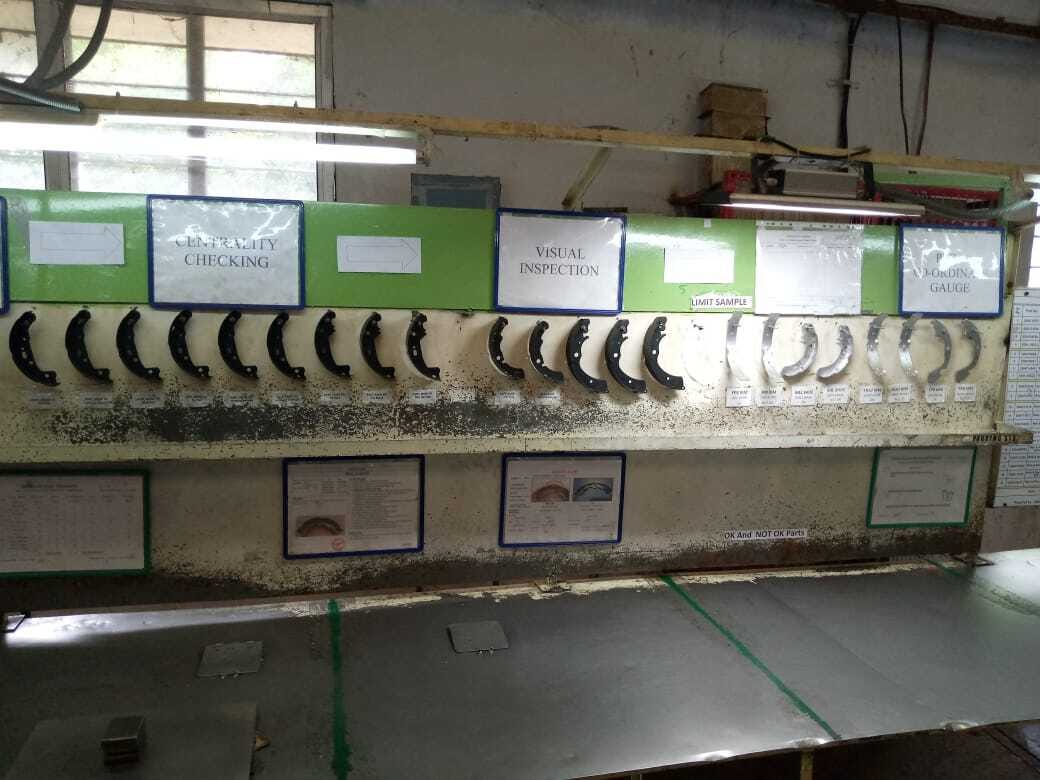
A normal firm here supplies larger automaker plants, making, for example, a car’s brake shoe. The factory receives sheet steel, stamps or presses it into shaped pieces, and then welds the parts together to create the finished build. This is then delivered directly to automakers or to their Tier-1 suppliers. There is a wide spread of the yearly revenue for firms; it can range from $1 million to upwards of $50 million. Although Sambhahjinagar’s economy is still closely tied to automakers, it also hosts packaging, pharmaceutical, and other industries.
The universal feature across all of these firms is that they are almost exclusively family-run. Nor is this a feature of just small enterprises; 90% of listed Indian firms are family-run. Can you name the current CEOs of American manufacturing giants like Ford and John Deere? In India, folks may not know the first name of the person running a major firm, but they will know their last name. For example, the utilities and steel manufacturer Jindal Industries is still run by a Jindal; India’s most famed industrial group, TATA, worth ~$400 billion, has had Tata at the helm for 139 of its 157 years. Families rule India’s industrial roosts.
Business owners in India usually give two explanations for this phenomenon. First, their legacies are dear to them, and they wish to pass the business on to their children. Second, in a low-trust environment with a weak rule of law, entrusting strangers with power risks betrayal without legal recourse.
Naturally, some business owners have sought alternatives to kinship management. Many business owners rely on a trusted steward they have known for years, sometimes even decades. These right-hand men often remain in their positions across multiple generations of family leadership. The downside for employees is that it takes a long time to earn that trust. It’s also not widely distributed, which means high-performing employees may find their paths blocked by a trusted manager whose highest priority is protecting his hard-won station. While owners can trust these lieutenants not to intentionally harm their businesses, that does not fix the principal-agent problem.
The next obvious alternative is to hire professionalized, credentialed managers. This seems like the natural fix, but it belies the reality of small and medium-sized plants in Sambhajinagar. The city lacks the spark of a big metropolitan city, and firms can offer comparatively little next to multinationals like Nestlé or Unilever. The top graduates from India’s best management schools have little incentive to come here. Who remains? Mostly mid- and lower-tier business school graduates. But with rampant grade and credential inflation, the quality of education at such institutions is mediocre at best, and, in some cases, outright fraudulent. Most factory operators in Sambhahjinagar don’t even consider delegating to graduates from lower-tier schools. Instead, owners overwhelmingly rely on foremen to oversee day-to-day operations. These supervisors typically hold technical diplomas in engineering, while the men under them often lack even a high school diploma.
Since the arrangement is in stable equilibrium and adapted to local conditions, one might assume that it works well enough. Yet, the reliance on family control creates hard limits. Expansion requires constant, trusted oversight, which means growth can only move as fast as male relatives mature into managerial roles. As a result, even the most efficient businesses often remain small, holding back productivity. One factory owner I interviewed said that his father’s firm was able to expand only because he was of age and could personally oversee the construction of a new plant.
What’s more, adult children are a dwindling resource in India. Fertility rates are nearing below-replacement levels, sustained only by states with little industrialization. Having no children is not uncommon, and most couples have one or two. This means that in the very regions where industry grows, families will have fewer sons, brothers, or cousins available to assume control. As kinship networks shrink, expansion becomes harder and harder, and growth is crippled.
Lifting these constraints would allow top-performing firms to scale, while forcing inefficient ones—propped up by suboptimal competition —to shut down. The payoff would be higher productivity, greater export competitiveness, stronger regional development, and faster economic convergence.
So how would AI actually improve Indian manufacturing?
The reliance on male kin is meant to make the shop floor legible to the C-suite. How can we get that without people? Or, at least improve visibility without relying on trusted sources?
The foundation lies with sight and memory. Cheap cameras and sensors at each line and work cell; wide views to watch flow, close views for changeovers and hands-on work. On top of that is an interface layer that allows the AI to communicate directly with the machines. This could mean basic control over machine start-up and shutdown to optimize throughput and prevent workplace hazards. It could also involve tuning machine parameters; this is usually considered an art rather than a science, but that’s an artifact of the lack of data. Data scientists in very large factories run analyses to determine the optimal tuning, something that has eluded smaller, low-information factory owners. Elsewhere, AI talks to workers and supervisors directly by sending clear, time-stamped steps, checklists, and questions.
This already exists in some minimal forms today. Consider the Y-Combinator-backed startup Optifye.ai. They intend to use computer vision to conduct robust surveillance of the entire production process and provide that information to the operator. They have a relatively basic setup: they place cameras around the factory and train their model on that context for three days. They then hook this up to analytics so that, ideally, the manager has a comprehensive dashboard to track KPIs, see which lines are performing at what capacity, which workers are or aren’t following all the necessary steps, etc. They even have a version of an improvement agent that currently looks like an LLM connected to the data via a RAG (Retrieval Augmented Generation) system. This is like a chat user interface embedded in the factory’s data backend, where you can ask questions like, “Who was the most productive worker this month?” “What are bottlenecks for production today?” “Which line was the least productive this week?” This is still a crude, toy version of what will be possible with robust, intelligent systems.
The most pressing issue, of course, is that current frontier LLMs cannot interact with video natively. While some models can generate it, they cannot view it the same way they can with a static image. However, if you pair video-native LLMs with the exponential gains in AI at long-run tasks, a workable setup is easy to see within five years. From then on, each factory could run a system that logs cycle times, changeover times, actual downtime (with reasons), movement of parts and stock, and queue lengths. Video feeds would let the AI run nonstop time-and-motion studies, tie tasks to stations and shifts, and infer context—such as tool wear, upstream starvation, rework requests, etc. It could watch individuals and crews under many states and shifts, making the marginal productivity legible in a way manual spot checks never could.
Today, much of this knowledge is distributed as “institutional memory,” a euphemism for poor documentation. Direct comprehension of the entire process is thus limited, and processes that should be precise instead require guesswork, even when making important decisions. An integrated AI system means the factory floor now has a durable, shared source of truth from which improvements flow.
Less sophisticated firms—such as textile manufacturers—could make incredible leaps by implementing even the most basic AI, as some factory managers across India still rely on paper logs that are rarely reviewed and poorly stored. Additionally, key performance indicators are often absent, and systematic optimization is uncommon. In a study of the impact of management consulting, using a randomized trial Bloom et al. (2013) showed that such “cutting edge” process improvements as organizing storage, logging defects, maintaining equipment, setting and tracking production targets, and keeping floors clean drove striking gains. Total factor productivity in firms implementing these changes rose by 16.6 percent over the course of a year, leading to profit increases. Treated plants began expansion trajectories that the control group did not. The study estimated that such consulting would cost a one-time $250,000 and yield a yearly improvement of $300,000, recovering costs within the year if not sooner. If one-off, human-delivered basics can move the needle that much, a persistent AI system, able to ingest more context and iterate faster, should deliver larger, more durable improvements.
Larger firms supplying established brands would benefit from a different type of AI implementation. Since their goods are fed forward to big car makers, they already face higher bars for quality and reliability. In many factories in Sambhahjinagar, workers punch in with fingerprints, and supervisors maintain digitized records when possible. Buyers audit their suppliers every six months, conduct routine floor inspections, and perform lot-by-lot tests. These audits, however, are quite old-fashioned. For example, automakers require their suppliers to use paper logs and records, believing they are harder to forge or alter.
The ability of AI to create material progress in a more modern Indian firm is non-trivial. Consider the problem of leakage. This manifests as late deliverables, stuck payments, uncatalogued raw materials and outputs, etc. Sambhajinagar firms generally have long-running contracts and run to meet those requirements. They also run to try to build up stock as a buffer. This is often a source of leakage, since these are sometimes mis-catalogued, damaged in storage, or simply lost (this is easier than you’d think in a complex factory operation). Just having cognitive bandwidth to hold and consider the inventory, orders being processed, etc., would bring efficiency gains for the factory.
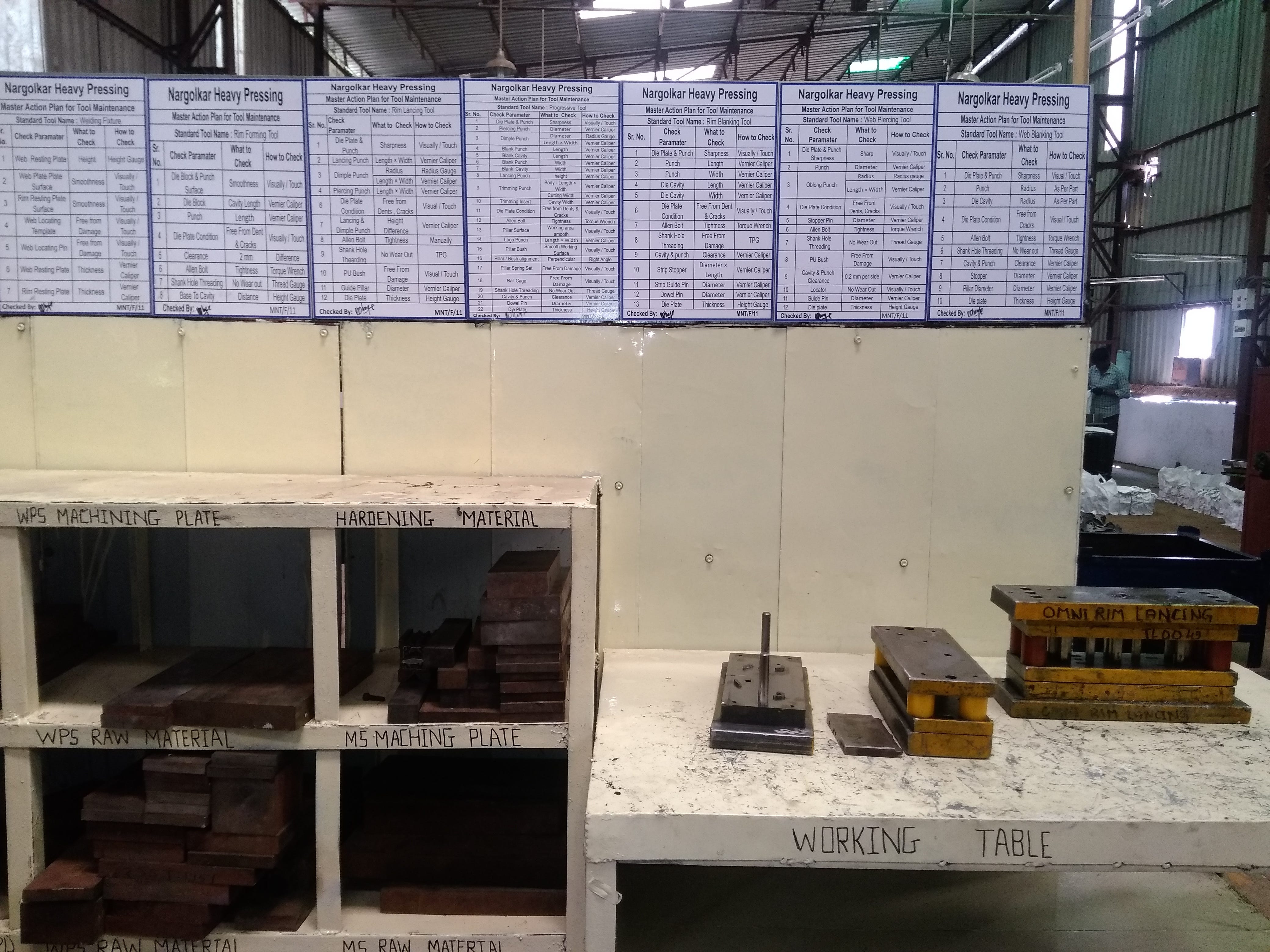
This is also important for people management. Most owner-operators inherit HR practices from their fathers. They have an intuition for local labor behavior but little exposure to formal structures. Even in Bloom et al. (2013), the “incentives” introduced were very basic. Review cadences, where supervisors and managers set goals, evaluate performance against data, and adjust, are rare. Here, AI can do three important jobs. First is simply paying attention, actually being able to observe the inputs and measure the outputs in more precise detail. Second, use this information to design sensible incentive schemes tied to observable metrics. Finally, AI can run controlled experiments, measure morale and output, and iterate toward an optimum rather than entrenching arbitrary thresholds.
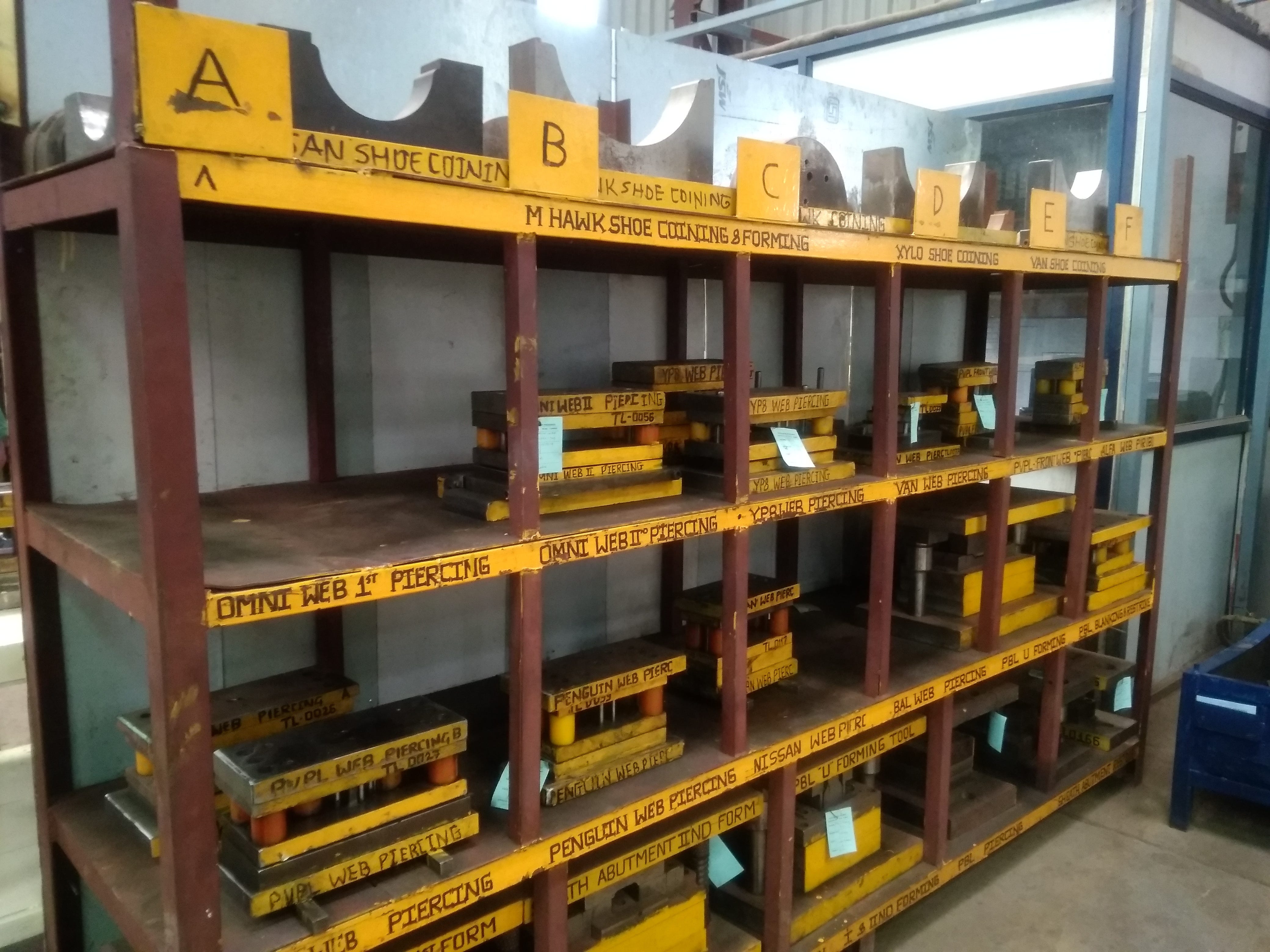
A great example is the day-to-day tracking of worker output. On the shop floor, a line might turn out 5,000 parts an hour, but a foreman can’t watch each line closely all the time. If production falls short, the foreman must decide whether to dock a worker’s pay. But, unless they directly saw the cause, they are essentially guessing. Supervisors face a tradeoff between leniency, meaning slack and lower productivity, and taking a hard line, meaning lowered morale and higher turnover. Continuous observation and context-aware targets collapse that trade-off. By distinguishing genuine underperformance from unavoidable disruption, AI resolves the information asymmetry at the heart of the principal-agent failure. This raises productivity without damaging worker morale. The AI can then set context-aware production targets to incentivize greater diligence from workers and experiment with them to improve productivity.
Further, for owner-operators, expansion and capital allocation are core jobs. Big purchases, such as new presses and CNC machines, are costly bets that require certainty. Many plants take on debt to fund this growth, only to find the load is too heavy and then require outside investors to rescue them. Of course, these firms have accountants to work through the numbers behind borrowing and capitalization, but those accountants often lack the gut feel for the business itself. Here, an AI assistant can step in as a steady, patient hand, one that spans both financial planning and a working grasp of the shop floor. It can sift through years of company data, current orders, and simple what-if cases, then weigh all that against the owner’s feel for the local market. More than that, it can serve as a sounding board, letting the owner talk out the state and shape of the business, test the logic, and see it from a fresh angle.
This too is a key role that family often fills, the chance to speak frankly about thorny matters with someone who is trusted and understands how the business runs. It is important to emphasize that this will likely be a top-percentile financial planner, one that raises the depth and soundness of the firm’s financial structure. The planner could help the owner better shape debt, explore more ways to raise funds, and use more tailored, if at times more involved, financial structures to achieve the best outcome. With this financial analyst at hand, the owner sees risks and rewards more clearly and in greater depth, which is precisely what is needed when making big capital allocation bets. This sharper view of risk means fewer mistakes and allows more confident use of capital where it does the most good.
Of course, capital allocation is the showy part of the business, but it is not what owners spend every day doing. The work that keeps businesses alive is the dull grind of following up: checking on orders, nudging clients, tracking suppliers, pinning down delivery times, and keeping tabs on where things stand. Owners spend a surprising share of their day simply chasing answers. An AI agent could shoulder much of this load. It can track what happened and when, and, crucially, tell the owner before they have to ask. And as voice agents improve, they’ll be able to speak directly with clients and suppliers, backed by full knowledge of what’s pending, what’s late, and what needs a nudge.
The legibility of an agent also opens ways to improve trust between the supplier and the client. Factories must be regularly audited, especially if they make critical mechanical equipment, as in Sambhajinagar. A lot of effort is spent making the factory’s processes legible to external auditors, which results in downtime and bureaucratic expense. AI agents, if designed to be verifiably truth-telling, could make verification for the buyer much easier. Clients could rely on them for their information instead of hiring people to conduct audits to ensure quality. Fewer audits, faster repeat orders, and better prices follow reliable performance. Given enough penetration, this might become an expectation from the buyer’s side. Unwillingness to expose your factory AI agent(s) to buyers would be a red flag.

Trust may also improve between intermediate suppliers, and an operator may be able to make promises that are not contractual yet are trusted to pan out. Many suppliers and buyers in Sambhajinagar are locked into relationships because building trust requires time. On-time deliveries are worth more than the materials they transport. Having an AI in charge of operations that can reliably forecast delivery would significantly reduce friction costs and improve market clearing.
For the first time, owner-operators would get a cheap, legible way to chart continuous improvement. Even a steady 10 percent efficiency gain compounds into a step-change in wealth creation for developing economies. Crucially, the old constraint that tied growth to the availability of trusted male kin begins to break. With trustworthy, inspectable agents handling supervision, planning, and controls, expansion no longer waits for a cousin to mature into a plant manager. The most efficient firms scale, lifting average productivity; low-efficiency firms, currently propped up by supply constraints and opaque practices, either improve or exit.
This also naturally lifts barriers to competition. If one does not have to scout for trustworthy managers before setting up a plant, then the pool of potential entrepreneurs expands. On the market side, truthful customer interfaces reduce costly signaling and “relationship moats.” This reduced deadweight loss in the economy means a higher volume of transactions for both buyers and producers.
Will Indian manufacturers embrace AI management? Can they embrace AI management?
Of course, technological diffusion usually is more challenging than early forecasters assume, and AI should be no different. How realistic is it for firms that still rely on outdated methods and run on stacks of paper to make this change? That’s actually two questions: Can they and will they?
On the “could” side, these factories are far from helpless. There are many tiers of sophistication across Indian industry; factories in Sambhajinagar are on the higher end. Owners keep vast stacks of paper not because they love paper, but because the Indian state and outside auditors require it. Whenever they have a choice, for internal books or reports, they already use software instead. Accounting and invoicing are often handled through SaaS tools like Tally. Many owners are willing to spend on tools that make day-to-day control easier, even when those tools look a bit daunting at first, as with biometric systems for attendance.
Other tech advances generally require more training and up-front set-up costs, but for AI, this does not seem to be the case. AI integration is likely to be built on top of current systems. Small industrial firms already have experience handling capex cycles and budgeting, so a modest outlay for AI integration is relatively easy for owners to grasp.
The real challenge lies with the less sophisticated firms. Their exposure to the new tools is limited, and so their adoption will be slower and more hesitant, shaped by hearsay rather than direct use. Once the technology saturates the more advanced firms, however, the broader business ecosystem will make it easier for laggards to follow. Vendors, auditors, and buyers will start speaking in terms of these tools, prompting others to follow. Of course, as firms that adopt the technology increase their productivity, the pressure to keep up should become more pressing.
On the “would” side, there are a few reasons to think AI tools stand a better chance than past waves of software. There would, of course, be an up-front friction, but the give-and-take nature of AI makes it feel much easier to work with than static software. ChatGPT grew faster than any other consumer product not only because it was useful, but also because plain language is a near-universal interface that users adapt to with little training. Text, especially speech, shortens the learning curve, making easy integration with the owner and staff.
There is, however, a clear challenge. LLMs built in the U.S. are mostly trained on English-language data. American firms seem keen to fix this, especially now that they are pushing hard into India. OpenAI’s India-exclusive “premium-lite” ChatGPT Go is offered only in India for around $5 a month. Google bundles Gemini for free with phone plans for students and young users. These offerings are meant to gain market share, but they will also serve as sources of the vast amounts of local language data that are still missing from the internet. While writing this piece, OpenAI released a benchmark for Indian languages, a move that strongly signals its intent to close this gap.
But even with a strong Indian-language LLM, there are other barriers. For one, the day-to-day workings of small and medium enterprises in Sambhajinagar are deeply embedded in informal structures—patronage networks, word-of-mouth agreements, and tacit understandings that substitute for formal contracts in a low-trust environment. This illegibility is precisely what makes businesses resilient despite the weak rule of law, but it also makes AI integration difficult. AI systems depend on structured, reliable, and recordable data to operate effectively. When agreements are formed over in-person conversions and the exchange of favors, AI will struggle to act.
On paper, agents tuned to legal compliance could guide firms through India’s maze of rules and filings. In practice, selective enforcement and routine rent-seeking are how many factories actually run. For example, new plants in Sambhajinagar tend to meet today’s fire codes, but retrofitting older layouts is costly and is therefore widely ignored.
As for the piles of clearances and certificates that are required even to begin running a factory, bribes are often crucial. Interview subjects say that clearances are still given without overt bribes, government employees cannot be too obstructive since that draws attention, but the file can rot on their desks for a while before it is processed. Bribes tend to cut approval times by two-thirds, which means months, not weeks, of saved time. Drop a truthful, always-on AI into this world, and it will either flag safety gaps and unfiled paperwork—exposing owners to penalties—or be neutered into inaction. That creates a core alignment dilemma: should the system be configured to act strictly in accordance with the law, or to accommodate the owner’s bottom line? If governments mandate tamper-proof, agent-generated reporting, many owners will limit or avoid integration; if they don’t, the public benefits of AI—safer workplaces, cleaner compliance data—won’t materialize. The diffusion of such systems will turn on who the AI is ultimately accountable to.
Another key barrier to the adoption of AI in manufacturing will be geopolitical. For developing countries like India, adopting AI for industrial management could mean outsourcing key elements of their productive capacity to foreign companies. Even though India relies on China for trade, increasing Chinese control of India’s industrial process is a hard sell. As for the US, policymakers are still antsy. Earlier, they would have cited the U.S.’s withdrawal of GPS access to the Indian military during the 1999 Kargil War against Pakistan. Now, they would point to the denial of Russian access to SWIFT and the general mercurial nature of the current administration. Local industrial capacity is also considered necessary for national security and, as such, is of greater geopolitical concern.
All of which is to say that AI integration and adoption are contingent on one of two scenarios: indigenization or localization. These political considerations are not lost on the leading labs. AI companies are clearly trying to put down roots in the Indian market through semi-localization. As of this writing, Google announced a $15 billion AI infrastructure push in the city of Vizag. Anthropic recently announced plans for an office in Bangalore -- the heart of India’s tech industry. OpenAI announced its office would be in the capital, New Delhi, and has signaled that it understands India’s wariness: “Opening an office in India reflects OpenAI’s support for the government’s IndiaAI mission and commitment to partnering with the government to build AI for India, with India,” the company said in a statement.
Finally, there is the political economy of diffusion. Hyper-optimization through AI may improve efficiency, but it could also provoke backlash from workers, unions, and regulators. The prospect of a panopticon, continuously monitoring workers, is genuinely worrying. While firms may pay more to compensate and labor markets will assortatively match workers, the political economy in places like Sambhajinagar suggests conflict is likely. Factory owners and unionized employees are already at odds. Even the idea of AI managers could spark a backlash and halt the technology in its tracks.
Promoting AI agents will also be a minefield. When Optifye.ai launched its factory line assessment interface with a promotional video, viewers described the demo as “dystopian” and “slavery as a service.” This is a very significant problem in a country like India, which has adopted labor laws more in line with those of developed nations. For example, the Indian Supreme Court recently banned the use of hand-pulled carts in a tourist destination, primarily on a broad reading of a constitutional directive promoting human dignity. India’s small and medium businesses generally skirt enforcement, but big tech companies seeking to enter the Indian market cannot. Factory owners I spoke to would consider a tool like Optifye.ai extremely useful, but one viral video could doom its prospects.
In the end, whether AI transforms factories in places like Sambhajinagar will turn less on model prowess than on the bargains we strike. Diffusion will require a workable pact: agents that are auditable by customers, governable by owners, and legible to regulators; safeguards that protect worker dignity while still measuring work; and a path for legacy plants to comply without being bankrupted. Add local control—data residency and credible fallback if foreign providers falter—and product design that defaults to transparency rather than covert surveillance. Get this alignment right, and AI stops being a headline about frontier labs and becomes a quiet, compounding force: cleaner books, steadier quality, fewer bottlenecks, more plants run well by fewer kin. Fail, and it will remain a spectacular demo that stalls on contact with the shop floor.
Anish J. Bhave is a recent graduate from Ashoka University. He is interested in the governance and economics of AI, especially its impact on market failures. You can find him on Twitter @Anish__B.
This essay was edited by Mike Riggs, RPI’s developmental editor.

https://x.com/awkwardgoogle/status/2043333818099417171?s=46&t=EqzXHuww-GZ4MQ9feX8xKg
Interesting essay. Low trust societies (communities) also exist online - I wonder if zero knowledge assurances will help people be more comfortable with their adoption?